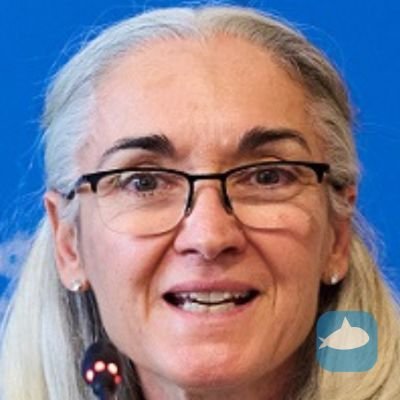
Eva Nogales
BiophysicistWho Is Eva Nogales?
Eva Nogales is a Spanish-American biophysicist and professor. In fact, she is a world leader in structural biology. Her birthday falls on May 16, 1965. So she is now 61 years old. She was born in Colmenar Viejo, near Madrid, Spain. Moreover, she works at the University of California, Berkeley. Today, she is celebrated for her pioneering research. As a result, Eva Nogales has earned many top science awards.
Early Life and Before Fame
Eva grew up in Spain with a passion for science. In fact, she loved physics from a young age. She studied physics at the Autonomous University of Madrid. There, she earned her degree in 1988. She then moved abroad for her doctorate. In 1992, she completed her PhD at the University of Keele. Therefore, her science journey spanned several countries.
Career
Eva_Nogales is a pioneer in structural biology. In fact, she uses powerful microscopes to study tiny molecules. Early on, she revealed the first atomic structure of tubulin. That discovery helped explain how the cancer drug taxol works. She later became a professor at UC Berkeley. Moreover, she joined the Howard Hughes Medical Institute. Today, her cryo-EM research advances cancer and disease studies.
Trivia and Fun Facts
Eva has earned some of science’s highest honours. In fact, she won the prestigious Shaw Prize in 2023. She was also elected to the US National Academy of Sciences. In 2025, she became a foreign member of the Royal Society. Notably, Eva Nogales is admired as a role model for women in science.
Family Life
Eva keeps her personal life fairly private. In fact, she is married to Howard Padmore. Together, the couple has two children. She balances her demanding research with family life. Even so, she shares little about her private world publicly.
Associated With
Eva Nogales is closely linked with UC Berkeley. In fact, she also works with the Lawrence Berkeley National Laboratory. She collaborated early on with scientist Kenneth Downing. Together, they made groundbreaking discoveries about microtubules.
Read this too: Robert Richardson